

speaker demo reel vs sizzle reel: what bookers actually watch
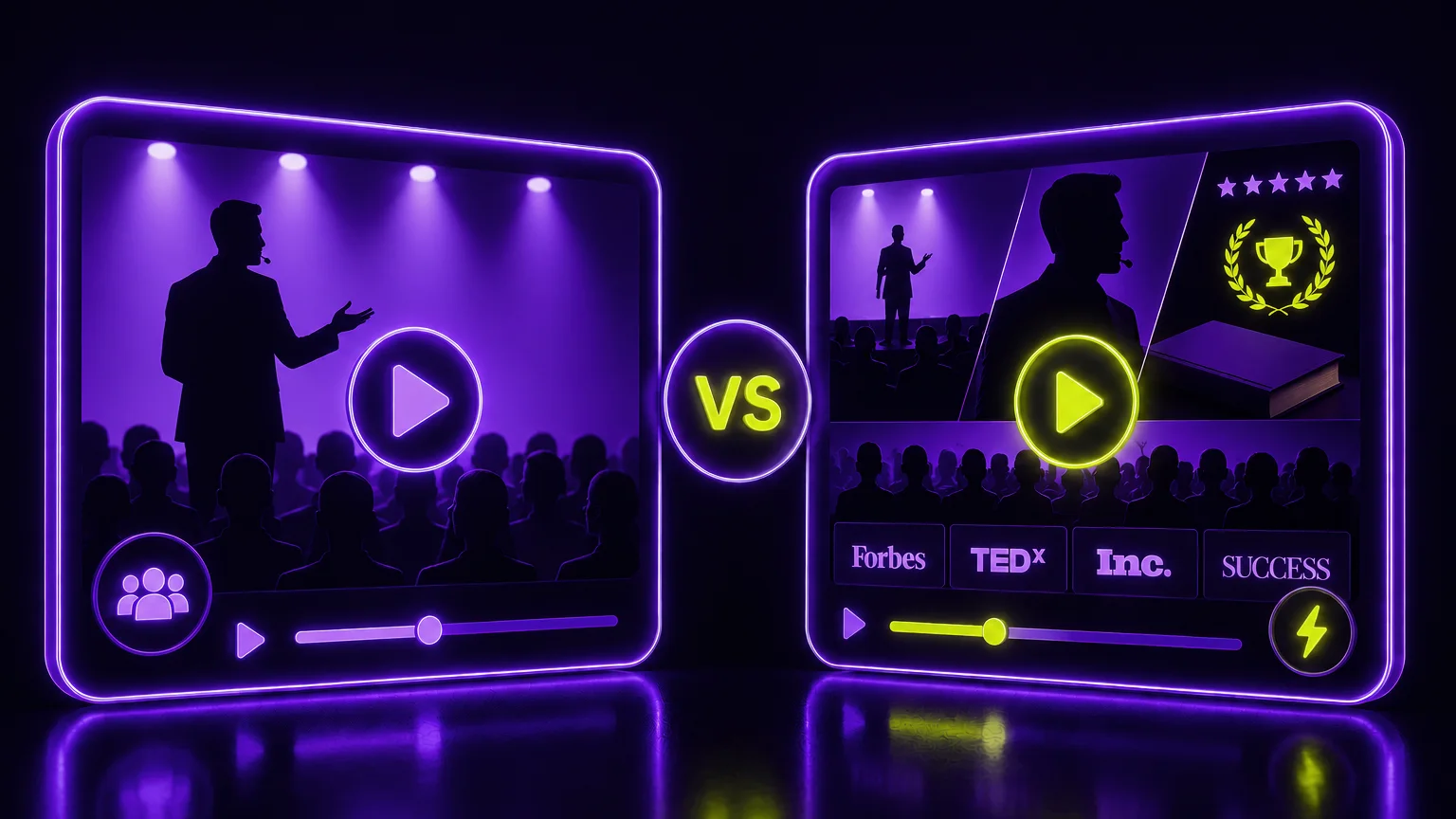
A speaker demo reel proves you can hold a stage. A sizzle reel sells the feeling of your brand. A highlight reel captures one event. Event organizers watch the demo reel first, because it answers the only question that matters: what happens when this person holds a microphone. The other two support the case. The demo reel closes it.
what is a speaker demo reel?
A speaker demo reel is a three to five minute video built from real stage footage. It shows you delivering a keynote to a live audience: your opening, your presence, the room reacting to you. Most include a short introduction, two or three signature moments, and audience shots that prove people were leaning in rather than checking their phones.
Think of it as evidence. An event organizer risks their reputation every time they book a speaker, and the demo reel is the closest they can get to sitting in your audience before they commit. A demo reel exists to answer one question: can this person carry a room. Everything in it should serve that answer.
what is a sizzle reel?
A sizzle reel is shorter, faster, and more cinematic. Sixty to ninety seconds of quick cuts, music, press logos, book covers, and the best two seconds of every talk you have given. It is a trailer, not a screening. The job is energy and status, not proof of craft.
Sizzle reels borrow their grammar from film trailers, which is why they work brilliantly in some places and fail in others. They shine on social feeds, conference pages, and the top of your homepage. They are weakest at the exact moment a booker needs to judge whether you can actually speak.
what is a highlight reel, then?
A highlight reel sits between the two. It is usually cut from a single event: one keynote, one conference, one audience. The organizers of that event often produce it themselves, which means the footage is real but the edit serves their brand, not yours.
Highlight reels are useful raw material. A strong one proves you delivered on a specific stage, and clips from it can feed your demo reel and your content for months. Treat a highlight reel as an ingredient, not the finished dish. On its own, it rarely books the next stage.
which one do event organizers actually watch?
Bookers are not browsing, they are shortlisting. Most open the demo reel first and decide inside thirty seconds. That opening stretch has one job: credibility. A real stage, a real audience, one moment where the room visibly responds to you. No amount of clever editing can fake that.
The middle of the reel earns the second minute. This is where range lives: a funny beat, a serious beat, a bigger room, a different crowd. It quietly answers the booker's second worry, that you are a one-room wonder who happened to be filmed on a good night.
The end should make saying yes easy. Your name, your speaking topics, how to reach you, held on screen long enough to screenshot. The demo reel is the video bookers watch all the way to a decision. The sizzle reel is what gets them to press play.
which should you make first?
If you have real stage footage, make the demo reel first. It does the heavy lifting in every serious booking conversation, and a sizzle reel can be cut from the same material afterward for a fraction of the effort. Starting with the sizzle means paying for the edit twice.
On budget, the market splits into clear tiers. Freelancer marketplace reel gigs run roughly $185 to $600. Specialist reel studios run $1,500 to $5,000. Premium production houses run $3,500 to $12,500, and typical professional demo reel spend lands between $2,500 and $5,000. The cheap end usually becomes generic work you end up redoing, which makes it the most expensive option on the list.
This is the thinking behind the speaker demo reels page: reel, brand, and website built as one system for international and award-winning keynote speakers, coaches, and authors. You talk for 45 minutes a month, and the studio builds and runs the rest.
what do all three need underneath?
Real stage footage. Not a webinar recording, not a talk self-taped in your office. Bookers can tell the difference in seconds. If you do not have usable footage yet, your next priority is getting properly filmed at your next two or three engagements, even the modest ones.
Honest crowd shots. Wide angles of full rows, close shots of faces actually reacting. The audience is the proof layer of every speaker video, and organizers look for it the way a lender looks for collateral. An empty room, however beautifully lit, is a confession.
Your brand on the titles. Same typeface, same colors, same tone as your website and your one-sheet. A reel that visibly belongs to your brand tells a booker you run a professional operation before you say a word. If you are not sure your brand can carry that weight yet, the $500 brand audit is where most of our clients start.
questions, answered.
how long should each one be?
A demo reel works best at two to four minutes: long enough to show range, short enough to hold a busy organizer. A sizzle reel should stay between sixty and ninety seconds. A highlight reel from a single event can run two to three minutes, since it is context for one stage rather than the whole case.
can one video be both a demo reel and a sizzle reel?
Not well. They answer different questions: the sizzle reel earns attention, the demo reel earns trust, and a video trying to do both usually does neither. The efficient move is to gather footage once, then cut both from the same library.
do speaker bureaus want a specific format?
Most bureaus ask for a clean demo reel, usually two to three minutes, with real keynote footage front and center and minimal effects. Some want a downloadable file rather than a link. Requirements vary, so check each bureau's guidelines before submitting, but a strong footage-first reel satisfies nearly all of them.
how often should i update my reel?
Review it once a year, and recut it whenever you land a noticeably bigger stage or launch a new signature talk. Footage that looks several years old quietly dates you. Bookers notice slide design, video quality, and audience fashion faster than you would think.
is a talking-head video ever enough?
As a stopgap, yes. A well-lit, well-delivered direct-to-camera video can support workshop, podcast, and virtual bookings while you gather stage footage. For keynote bookings it is not enough, because it proves you can talk, not that you can hold a room, and holding the room is the entire product.